
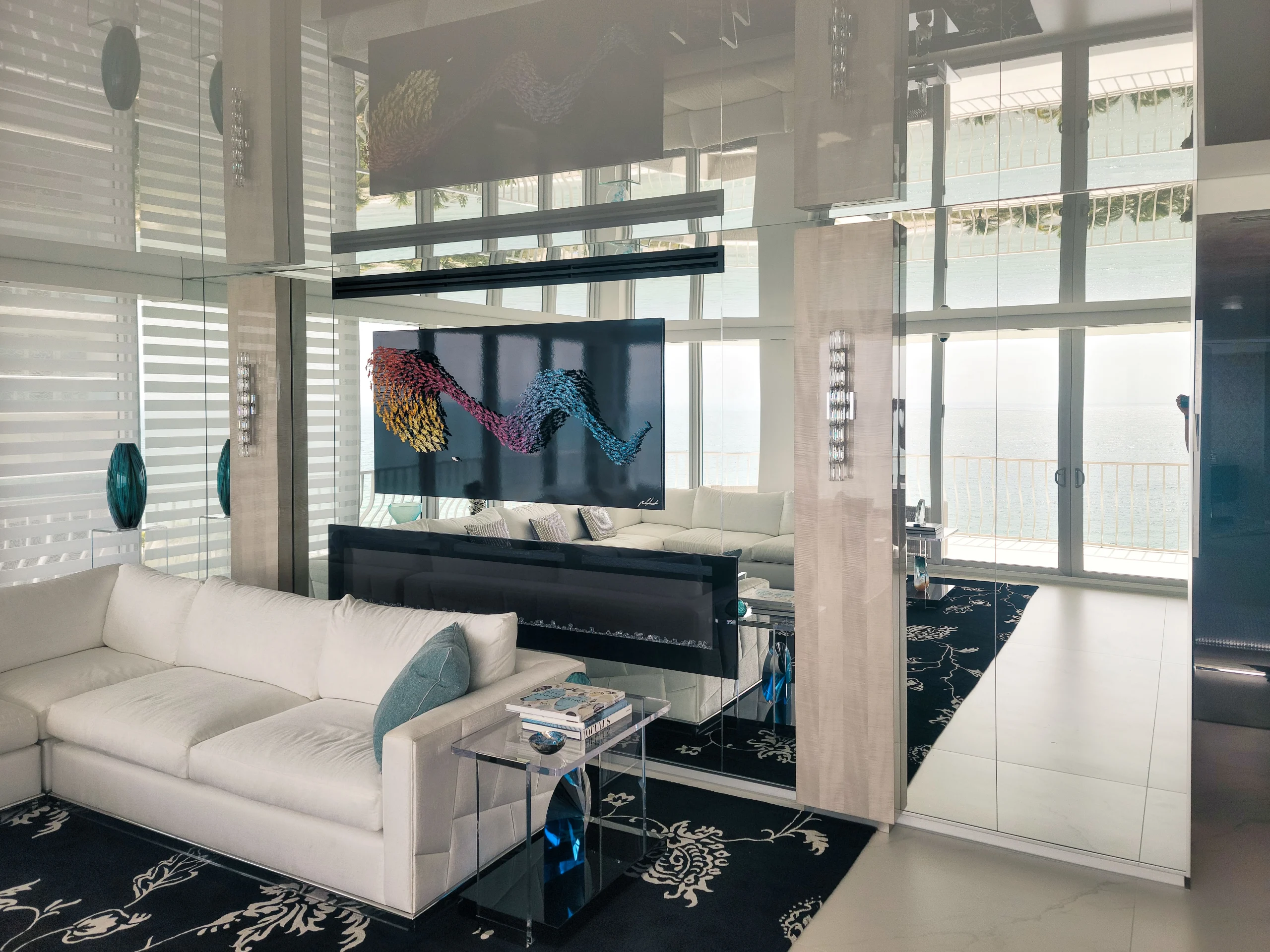

Choosing mirrors for a gym isn’t just about aesthetics—it’s primarily about safety, durability, and meeting the specific conditions of your space. When we’re talking about a gym in South Florida, it’s essential to consider the climate, intensity of use, and quality of installation. In this article, we’ll examine the complete set of criteria: from dimensions and glass type to mounting with consideration for the region’s climatic characteristics. You’ll learn what to pay attention to when buying a large mirror for a gym, how to evaluate thickness and safety, and how to properly plan the installation.
Why Gyms in South Florida Have Special Requirements for Mirrors
South Florida means high humidity, proximity to the ocean and salty air, frequent temperature fluctuations between air-conditioned spaces and the outdoors. These factors create increased stress on materials:
- Metal mounting hardware can corrode faster.
- The mirror’s backing surface (amalgam) is susceptible to peeling from moisture.
- Glass and fixtures can deform due to temperature changes and microclimate conditions.
That’s why when buying a mirror for a gym in South Florida, it’s especially important to use moisture-resistant and corrosion-resistant materials, carefully select the mounting system, and account for the space’s specifics. These measures ensure longevity and installation safety, not just a “pretty” appearance.
What Mirrors Are Considered “Large” and What Sizes Are Chosen for Home Gyms and Commercial Gyms
What counts as a large mirror? If we’re looking at gym applications, panels with sides measuring approximately 120 cm (or roughly 48 inches) and larger can already be considered “large” mirrors for active zones. For home gyms, people often choose panels sized, for example, 1200×600 mm or 1500×900 mm. For commercial gyms, full-height panels from floor to ceiling or sections around 1800×1200 mm and larger are frequently used.
The selection logic works like this: a wide panel allows you to capture a larger viewing zone—an athlete sees themselves completely, and a trainer can monitor form. On the other hand, excessively large mirrors are more difficult to mount, transport, and replace if damaged. When choosing custom mirrors, you should balance between zone coverage and ease of mounting and replacement.
Glass Thickness: 1/4 vs 3/16 — What’s Safer for Workouts
When it comes to choosing glass for spaces with active use, such as a gym, selecting the optimal thickness is crucial. Let’s examine two common options:
- 3/16 inch thickness (approximately 4.8 mm) works well for smaller home gyms where there’s a lower probability of impact against the mirror. However, this thinner glass is more susceptible to vibration and you might notice some slight “movement” of the panel when touched.
- 1/4 inch thickness (approximately 6.35 mm) represents the industry standard for commercial gyms. It provides enhanced strength, better resists impacts (for example, from a dumbbell if carelessly placed nearby), bends less, and looks more premium.
The bottom line: when buying a mirror for a gym, you should probably lean toward 1/4 inch thickness—this is what’s suited to high-activity environments, providing greater safety and durability.
Types of Gym Mirrors: Standard, Frameless, Sectional, and Full Glass Panels
Different constructions allow you to adapt mirrors to the design and operation of gyms:
- Standard (framed) mirrors have the mirror inserted into a frame. The advantages include edge protection, hidden mounting hardware, and sturdy installation. These are ideal where reliability and invisible mounting are required.
- Frameless mirrors (with polished edges) offer a modern look that visually expands the space. They require careful mounting and a perfectly flat wall.
- Sectional panels consist of a series of separate mirror panels installed side by side. The convenience here is that you can replace one section if damaged. They offer flexibility in terms of layout.
- Full glass panels represent the premium option—mirrors from floor to ceiling, often without visible seams. This creates a “mirror wall” effect. However, delivery and installation of such a construction is more expensive and complex.
When choosing the type of construction, you should consider the gym’s style (home or studio), installation cost, replacement possibilities, humidity levels, and workout frequency. For a gym, it’s better to choose more durable options—standard or sectional—and only in premium studios should you opt for full glass panels.
Safety: Tempered Glass, Shatter Protection, and Impact Resistance
Safety is a key criterion when selecting a mirror for a gym. Here’s what’s important and what you need to know:
- The glass must be tempered. The tempering process makes glass approximately five to seven times stronger than regular glass. When tempered glass breaks, it crumbles into small, blunt fragments rather than large, sharp shards. This is critical in an active environment with weights, resistance bands, and people moving around.
- Additional option: a safety film that holds fragments together or prevents them from scattering when the glass integrity is compromised. This is especially relevant for gyms where the risk of impact against the mirror is higher.
- Impact resistance comes down to this equation: thicker glass plus reliable mounting plus absence of mechanical weak points equals minimal risk of breakage during workouts.
- Considering South Florida’s humid climate, it’s important that the mirror’s back side be protected from moisture—the amalgam shouldn’t corrode, otherwise the mirror can “fog” from the inside or develop internal defects.
If mirror installation is done without these measures, safety and durability are questionable. It’s better to immediately focus on a proven supplier who offers custom mirrors with these requirements in mind.
How to Properly Install Large Mirrors in a Gym: 2026 Requirements
Mounting large mirrors requires attention to detail. Below are current recommendations:
- Use professional mounting hardware: clips, Z-brackets, anchor bolts. Mounting with liquid nails as the primary fixation method is not recommended.
- Layout planning: placement of mounting points must account for the panel’s weight, load distribution across the wall, and possible vibrations from equipment.
- Distribution of mounting points: large panels require at least four mounting points (and often more) vertically and horizontally. Mounting from above chin height to the ceiling is especially important.
- Gaps: there should be a small gap between the wall and panel to avoid direct contact of glass with the wall and allow for slight “movement” of the construction. Also, in humid climates, ventilation behind the panel is important.
- Anticipated tightening of standards by 2026: it’s expected that standards will begin requiring the use of glass with safety film and anti-seismic mounting in commercial facilities. It’s worth orienting toward installation with such requirements in mind right now.
- Wall surface must be perfectly flat, without protrusions. Before mounting, you need cleaning, leveling, and priming. This is especially important in humid climates to avoid deformation of the mounting components and moisture penetration.

Mounting on Wall, Concrete, or Mirror Panels: What to Choose for South Florida Spaces
The choice of mounting method depends on the wall type and budget. For South Florida, it’s especially important to account for humidity and ventilation. Let’s break down the options:
- Drywall. If the gym is set up inside a building with drywall—mounting into studs is mandatory. Using toggle anchors or molly bolts is acceptable, but only if studs are inaccessible. It’s better to install solid metal studs behind the drywall in advance.
- Concrete/brick. Mounting should be done with heavy-duty plugs and anchor bolts rated for the mirror’s weight. A concrete wall better withstands weight and vibrations from equipment.
- Mirror panels (sectional construction from separate sections). Replacing an individually damaged section is simpler. If there’s a choice—this is the preferable construction.
- Additionally: sealing joints with silicone sealant is important, especially if the wall is prone to condensation, and mounting hardware should be made from corrosion-resistant materials (for example, stainless steel).
For spaces in Florida, where humidity and salt air are elevated, a sectional mirror construction with ventilation behind the panels and stainless steel mounting hardware will be the optimal choice in terms of durability and safety.
Moisture Resistance and Corrosion: Important Details for Gyms in Humid Climates
South Florida’s humid climate demands special attention to moisture resistance and corrosion protection:
- The mirror’s back side should have moisture-resistant coating or paint that protects the amalgam from peeling and corrosion.
- Mounting hardware should be made from stainless steel or at minimum be galvanized and treated against corrosion. If ordinary steel brackets are used, they can start rusting, which will damage the mounting and reduce safety.
- Sealing joints between mirror panels and the wall, as well as between panels themselves, is important. The silicone sealant should be moisture-resistant, resistant to mold and salt air. Without proper sealing, mold can form behind the mirror, which is unacceptable in a fitness environment.
- If the mirror fits tightly against a damp wall without ventilation, condensation can form between the wall and panel, which can lead to corrosion of the mounting hardware and deterioration of the reflective surface.
- When making a purchase, inquire about the manufacturer: make sure the company provides custom mirrors with consideration for humidity and corrosion conditions. For example, Mercury Glass & Mirror offers large custom mirrors and emphasizes that they can adapt size, shape, and materials to the space (including fitness rooms).
These details help guarantee that the mirror won’t become a source of problems in a year or two, but will serve for a long time while maintaining its appearance and technical reliability.

Custom Mirrors for Gyms: When It Makes Sense to Order Individual Panels
Sometimes standard mirror sizes and configurations just don’t work—that’s when custom mirrors become the optimal solution. This approach makes sense in the following situations:
- When the wall has a non-standard shape, such as arches, trapezoidal sections, or semicircular elements that require mirrors to follow these unique contours.
- When you need to cover a very large area “from floor to ceiling” without visible seams, or create a panel with the minimum number of joints for a more seamless appearance.
- When you want a special mirror tint, reflection with enhanced brightness, or panel design tailored specifically to your studio’s aesthetic.
- When the space serves as a premium studio or fitness facility with high demands for presentation and visual impact.
Ordering individual mirror panels means higher costs and a longer production and installation timeline. But the results can be significantly better: you get a maximally adapted solution that accounts for the specifics of your space, climate, and mounting requirements. So if the gym represents a serious project, it’s worth considering the custom panel route. Mercury Glass & Mirror offers exactly these kinds of solutions: large panels with individual sizes and shapes.
Conclusion: How to Choose Safe and Durable Mirrors for Your Gym
Here’s your final checklist when selecting a mirror for a gym:
- Tempered glass is the most critical safety requirement you cannot compromise on.
- Optimal thickness should preferably be 1/4 inch (approximately 6.35 mm) for active environments—thinner options are less safe.
- Moisture-resistant materials and corrosion protection are especially vital for South Florida conditions where humidity and salt air are constant factors.
- Professional installation on reliable mounting hardware, accounting for gaps, ventilation, and proper anchoring systems.
- Consider wall type (drywall, concrete, sectional construction) and climatic characteristics like high humidity and salty air when planning your installation.
- If you need non-standard size or design, choose custom mirrors that can be tailored to your exact specifications.
Don’t cut corners on safety and durability—a large mirror for a gym should combine presentable appearance, functionality, and technically sound mounting. These elements work together to create a space that’s not only visually appealing but genuinely safe for intense physical activity.
If you’re looking for a proven supplier in South Florida, consider Mercury Glass & Mirror. The company provides services for manufacturing and installing mirrors, panels, and glass solutions throughout Miami, Hollywood, and the surrounding area. Visit https://mercuryglassandmirror.com/ to learn more about available options, calculate your mirror price, and get expert consultation—a safe and durable solution for your gym awaits you!