

When penetrating oils are applied to mechanical parts, the visible spray is only the beginning of the lubrication process. The solvent carrier first helps transport active ingredients into narrow spaces, then gradually leaves the surface as the remaining lubricant forms a protective film.
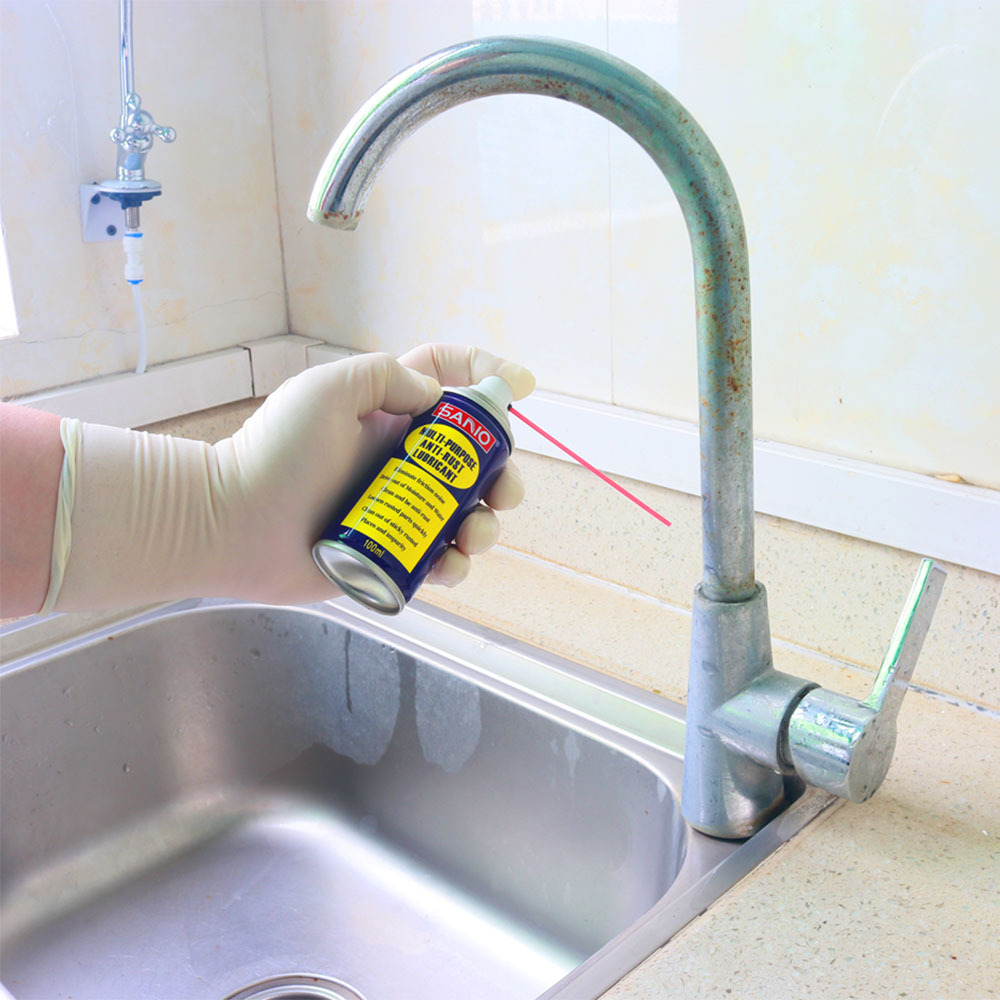
The final condition of this oil film affects how effectively the product reduces friction, prevents corrosion, and supports equipment maintenance. If solvent evaporation is not properly controlled, the remaining lubricant layer may become too thin, too heavy, or uneven.
For an aerosol lubricant manufacturer, controlling solvent evaporation is a key part of designing penetrating oils that deliver balanced penetration and lasting surface protection.
The Journey From Liquid Spray to Protective Oil Film
A penetrating oil does not immediately become a finished lubricating layer after spraying. The product goes through several stages before reaching its final condition on the metal surface.
First, the solvent carrier helps keep the formulation sufficiently fluid for spraying and spreading, allowing the product to reach narrow gaps and contact areas. This stage is essential because many mechanical problems occur in locations that are difficult to reach.
After penetration occurs, the solvent begins to evaporate. As the carrier evaporates, the non-volatile lubricant components become more concentrated on the surface and can leave a lubricating or protective film.
The transition between these stages affects the final film thickness. A carefully designed evaporation profile allows the oil to move where it is needed before leaving enough residue to provide protection.
Why Evaporation Balance Is More Important Than Maximum Speed
A common misunderstanding is that faster evaporation always creates better performance. In reality, evaporation speed must match the intended application.
Fast evaporation can be useful when users need quick penetration and minimal surface residue. It allows the lubricant components to remain on the surface sooner and reduces waiting time after application.
However, if evaporation occurs too rapidly, the product may lose mobility before reaching deeper areas. This can reduce the effectiveness of penetrating action, especially on corroded fasteners or complex mechanical assemblies.
The value of a slower evaporation system lies in the extra time it provides for spreading and penetration, but excessive solvent retention can create new problems—delayed lubrication or unwanted residue.
The best formulation is not the fastest or slowest system but one that creates the right balance between movement and protection.
How Film Formation Affects Different Maintenance Applications
The ideal oil film thickness depends on where the penetrating oil will be used.
For precision equipment, excessive residue may interfere with movement or attract dust particles that affect component performance. In these situations, a controlled thin film is often preferred.
For outdoor machinery or parts exposed to moisture, a stronger protective layer may be needed to reduce oxidation risks.
Automotive maintenance applications may require both penetration and temporary protection because components can experience contamination, temperature changes, and repeated operation.
Because application conditions vary, manufacturers must design solvent systems according to the expected working environment rather than using one evaporation profile for every product.
The Interaction Between Solvent Volatility and Lubricant Concentration
Solvent evaporation changes the concentration of active lubricant ingredients on the surface. As the carrier disappears, the remaining oil becomes thicker and more concentrated.
This concentration process influences how the protective film behaves after application.
If the solvent system is poorly matched with the lubricant base, the surface may experience uneven coverage. Some areas may receive insufficient protection, while others may contain excessive residue.
A carefully balanced formulation allows the lubricant components to distribute evenly before the solvent leaves the surface.
This relationship between volatility and concentration is one reason penetrating oil development requires precise chemical understanding rather than simply increasing lubricant content.
Designing Formulations for Real Working Conditions
Laboratory performance provides useful information, but industrial maintenance products must also perform under actual operating conditions.
Machines may be located in workshops, outdoor facilities, transportation equipment, or manufacturing environments where temperature, airflow, and surface contamination vary.
These conditions influence how quickly solvents leave the surface and how the remaining oil film develops.
A professional aerosol lubricant manufacturer considers these practical situations during product development. The goal is to create a formulation that performs consistently despite differences in application environments.
Understanding real usage conditions helps prevent situations where a product performs well in testing but fails to meet expectations during daily maintenance work.
The Role of Solvent Selection in Spray Application Quality
Solvent selection affects not only evaporation but also how the product leaves the aerosol can.
A suitable solvent system supports smooth atomization, even coverage, and controlled spreading after spraying. Poor solvent compatibility may lead to inconsistent spray patterns or uneven lubricant distribution.
For industrial users, these differences influence application efficiency. A product that spreads predictably requires less reapplication and provides more reliable maintenance results.
The solvent carrier therefore serves multiple functions: it supports delivery, controls penetration behavior, and influences the final protective film.
Conclusion
Solvent carrier evaporation rates have a direct influence on how penetrating oils transform from a spray application into a protective lubricating film. The evaporation process affects penetration efficiency, residue level, and long-term surface protection.
For companies selecting maintenance solutions, working with an experienced aerosol lubricant manufacturer helps ensure that product performance matches real application requirements. SANVO continues to develop aerosol lubrication solutions by focusing on formulation balance and practical industrial performance.
A deeper understanding of solvent behavior allows users to choose penetrating oils more effectively and achieve better results in equipment protection, maintenance efficiency, and lubrication reliability.
