

Global seating projects involve more than producing large quantities of chairs. Suppliers may need to deliver products to several countries, follow different installation schedules, and maintain consistent specifications across venues. Government buildings, transport hubs, educational institutions, and healthcare facilities also have different requirements for layout, durability, and maintenance.
Procurement teams should look beyond quoted output when evaluating suppliers. Production planning, quality control, export coordination, and after-sales support all affect project delivery. Reviewing these areas before signing a contract helps buyers identify risks, coordinate different locations, and set realistic expectations for each stage.
Production Capacity Goes Beyond Factory Size
Factory size provides useful background, but it does not show how well a supplier handles simultaneous orders. Buyers should review production lines, equipment capacity, workforce allocation, and current workloads. These details help determine whether several projects can proceed without putting existing orders under pressure.
Seating production may involve mold development, metal fabrication, surface treatment, injection molding, foam production, and woodworking. When these processes depend heavily on external suppliers, delays in one stage can affect the entire schedule. Integrated manufacturing can reduce handoffs and give project managers clearer oversight of production.
Buyers should also ask how capacity is allocated among contracts. Suppliers need a practical method for scheduling materials, labor, machines, and inspections. Production plans with clear milestones offer more useful evidence than general statements about annual output.
How Will Delivery Schedules Match Each Site
Multi-site projects rarely follow one delivery plan. A university may need seating for several lecture halls, while a transport project may involve buildings with different handover dates. Procurement teams should check whether orders can be divided into batches that match each site’s construction schedule.
A seat factory should explain how it handles material shortages, order changes, and delayed site readiness. Buyers can request a schedule covering material preparation, manufacturing, inspection, packing, and dispatch. This helps identify dependencies before they affect installation.
International deliveries require additional preparation. Export documents, packaging requirements, shipping arrangements, and customs procedures can affect arrival dates. Buyers should clarify who handles each task and how updates are shared. Shipment tracking and a designated project contact can help teams respond when delivery dates or site readiness change.
Quality Control Must Remain Consistent
Consistent quality matters when seating is installed across several buildings or countries. Differences in wood finishes, upholstery colors, dimensions, or mechanical components can create visible inconsistencies. Buyers should confirm how approved samples, drawings, material specifications, and inspection criteria are recorded before mass production begins.
Inspection procedures should cover incoming materials, production stages, and finished products. Project teams need to know which characteristics are checked and how defects are documented. Retained specifications and inspection records also help compare repeat orders with previously approved batches.
Clear documentation becomes particularly important when several contractors share purchasing responsibilities. Procurement managers, architects, and local installation teams need the same approved information. Buyers should confirm who can authorize design changes and how revised drawings reach production teams at every stage.
Product Design Must Suit the Venue
Production capacity alone does not determine whether a supplier suits a project. Buyers must also assess how the selected seating fits the building layout, daily use, cleaning routine, and user requirements. Lecture theaters and conference facilities may have limited floor space, making seat dimensions and movement mechanisms important during planning.
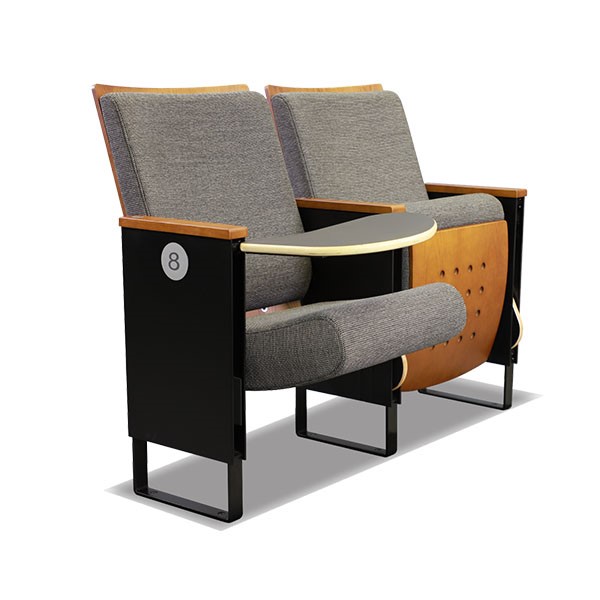
The ARCADIA ELITE WOOD LS-20602W from Leadcom seating has a compact profile designed for venues and lecture theaters where space is limited. Its wooden outerback and seat pan feature wood veneer finishes, while the armrests are made of hardwood. These details provide a coordinated appearance and support routine cleaning and maintenance.
The model uses ergonomic cold-molded seat and back cushions, together with a counterweight tip-up seat mechanism. An anti-panic writing tablet is available as an option. Buyers should confirm the required configuration and room layout before approving drawings and production quantities.
After-Sales Support Extends Beyond Delivery
Delivery is only one stage of a multi-site project. Products must arrive in suitable condition, match approved layouts, and be ready for installation. Buyers should confirm whether installation instructions, assembly guidance, and technical assistance are available to local contractors.
After-sales arrangements also deserve attention. Defects discovered after installation may require replacement parts or technical advice across borders. Procurement teams should ask how service requests are handled and how responsibilities are divided among the manufacturer, distributor, and local installation team.
The service structure of Leadcom seating includes a five-year warranty and an eight-part VIP after-sales service system. Buyers should review warranty coverage, exclusions, and service procedures before including these arrangements in project plans. Written agreements clarify the support available after handover.
Communication Keeps Teams Aligned
Large contracts often involve purchasing departments, consultants, contractors, and local distributors. Different time zones and reporting procedures can complicate coordination. Buyers should identify the project manager, technical contact, and escalation process before manufacturing begins.
Regular progress reports can cover completed production stages, pending approvals, inspection results, and expected dispatch dates. This information helps procurement teams identify delays while adjustments are still possible. Shared records of technical decisions also reduce the risk of different sites working from outdated specifications.
Suppliers that coordinate product development, material processing, and finished seating within one production system may simplify communication across orders. Buyers should verify these capabilities through factory visits, sample inspections, production records, and relevant project references rather than relying on general claims. Evaluating each seat factory against the same criteria makes comparisons more practical.
Make the Decision With Verifiable Evidence
A sound evaluation combines production capacity, quality procedures, delivery plans, product suitability, and after-sales arrangements. Buyers can compare suppliers against consistent criteria and request evidence for each area. Sample checks and reference projects help establish whether stated capabilities match actual operations.
Global projects require coordination throughout manufacturing, shipping, installation, and handover. Suppliers must manage changing schedules, preserve approved specifications, and communicate clearly across locations. Evaluating these factors before placing an order helps procurement teams make informed decisions and reduce avoidable problems during project delivery.
