
The largest master-planned community in Queensland, Ecco Ripley development, was created to help solve the state’s housing deficit and accommodate its rapidly increasing population. Combining scale, sustainability, and long-term liveability, it is one of the most ambitious urban projects in the country.
The project, which is 42 kilometers southwest of Brisbane in the Ripley Valley, will house 50,000 homes and more than 120,000 people over the course of the next three decades. By combining housing, infrastructure, and environmental projects, the Ecco Ripley development sets the standard for communities to come.
Given that Queensland’s population is growing at a rate of 2.3% per year, significantly faster than the national average, these kinds of initiatives are becoming more and more important to satisfying demand and guaranteeing sustainable growth.
Australia’s Largest Master-Planned Community Addresses Housing Demand
The 194-hectare Ecco Ripley development is the biggest master-planned community in Australia to be owned by a single entity. With a $1.5 billion commitment from Japanese developer Sekisui House, the project started building in 2012 and the first tenants moved in in 2014.
As of right now, Stages 1 and 2 are fully sold out, and Stage 3 is garnering a lot of pre-release demand, indicating significant market acceptability. The community currently has around 130 families living there, and construction is ongoing in several stages of development.
With a planned pace that enables infrastructural construction to keep pace with residential growth, the project’s timeline spans until 2057. This methodical strategy responds to frequent complaints about master-planned communities that grow too quickly without sufficient auxiliary services.
Its importance in the state’s housing supply policy is highlighted by market analysis, which shows the development will house almost 25% of Queensland’s anticipated population expansion. According to industry watchers, as traditional suburban expansion approaches its limits in terms of infrastructure and geography, these kinds of expansive developments become more significant.
Environmental Awareness Is Driven by Sustainable Design Concepts
A key component of the Ecco Ripley development’s architectural concept is still environmental sustainability. By earning Queensland’s first Five Star Green-Star Community accreditation from the Australian Green Building Council, the community set new standards for environmentally friendly home construction.
The project includes 40 hectares of recreational areas, or more than 20% of the total area, in parklands and green spaces. In the first year of landscaping activities, 93,000 native groundcover plantings were added to the extensive native vegetation projects, which comprise more than 2,000 trees and shrubs.
Comprehensive stormwater management systems are integrated into infrastructure development, and one such system is a regional retention basin with a clay core that is six meters deep. These amenities show integrated regional planning techniques by serving not just Ecco Ripley but also larger Ripley Valley developments.
The architecture of homes is influenced by Japanese architectural ideas, which encourage balance between man-made and natural landscapes. In order to support contemporary connectivity needs and preserve aesthetic integration with landscape features, fiber optic infrastructure is installed in every planned home.
Economic Impact and Infrastructure Investment
There are significant economic benefits to the Ipswich area from the Ecco Ripley development. Over the course of the development, 12,000 jobs in construction, retail, services, and continuing community activities are expected to be produced, according to project predictions.
The investment in infrastructure has been extensive; since 2014, the main contractor, SEE Civil, has completed more than 1.4 million cubic meters of earthworks. Over one kilometer of Ripley Road has been upgraded with four signalised junctions that are adapted to anticipated traffic levels as part of the road infrastructure enhancements.
With a Coles supermarket as the anchor tenant occupying 3,800 square metres, the $40 million first stage of Ripley Town Centre is currently under development. Residential areas will be able to stroll to medical facilities, childcare centers, educational institutions, and entertainment venues located inside the 25-hectare commercial sector.
Springfield railway line expansions are part of the transportation infrastructure planning that accounts for future train connectivity. Public transportation now depends on dedicated bus services, with infrastructure built to support rail construction when population growth warrants expenditure.
Diversity in Housing Targets Market Segments
There are housing alternatives in the complex for a variety of budgets and demographics. There were 47 lots in the most recent Stage 4 releases, with sizes ranging from 310 to 729 square meters and prices starting at $153,000. Duplex configurations and other house and land bundles start at $318,900.
A well-known builder in Queensland, Brooklyn Homes understands the increasing need for a variety of home options in master-planned communities. The company’s experience with land and home packages throughout South East Queensland shows that there is a market desire for sustainable, well-designed community living.
A quarter of Sekisui House’s housing stock will remain reasonably priced for first-time homebuyers and vital workers. Ten percent is set aside for accessible housing, and five percent is allocated for social housing, resulting in a diverse population across all income brackets and phases of life.
The Situation of the Queensland Real Estate Market
A compelling backdrop for major developments is provided by Queensland’s real estate market. Federal estimates indicate that by the time Brisbane hosts the 2032 Olympic Games, the state’s population will have grown by more than sixteen percent. The growth corridors in South East Queensland are experiencing sustained housing demand as a result of this expansion.
By 2025, median home prices in Brisbane are expected to reach $912,000, while in Queensland, 99 new areas are anticipated to break million-dollar medians in the coming year. These market conditions encourage more investment in master-planned communities as a substitute for conventional suburban growth. Important market indicators that enable sustained growth include:
Factors related to demographics:
- Interstate migration is still occurring from states with higher costs.
- Resumption of skilled and international student migration
- Accelerated decentralisation of the regional population
- Employment growth in the service and technology industries
Financial Measures:
- Keeping gross rental returns for homes between 4.5% and 5.2%
- Lower than 1% vacancy rates in some Brisbane suburbs
- Regional infrastructure investment of more than $100 billion
- Forecasts from major banks indicate yearly growth of 3% to 7.4%.
Well-established master-planned communities serve as models for development. As the largest master-planned city in Australia, Springfield spans 2,860 hectares and is a prime example of large-scale community development done right along the western growth corridor.
Aspects of Community Living and Investment
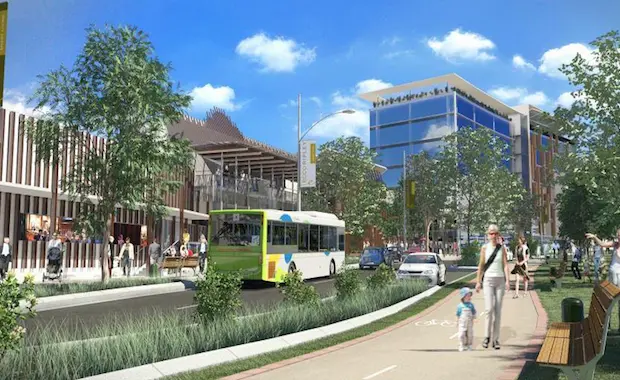
Both buyers looking to make investments and owner-occupiers looking to improve their lifestyle will find the Ecco Ripley development appealing. Through large networks of pathways for bicyclists and walkers that connect residential zones with recreational spaces, community planning places a strong focus on outdoor living.
Planning for education involves many school levels, from early childhood centers to secondary schools. Tertiary alternatives are accessible through Springfield’s University of Southern Queensland campus, while the larger Ripley Valley Priority Development Area promotes regional educational initiatives.
Having planned medical facilities and being close to important health infrastructure promotes access to healthcare. The Springfield Health Precinct serves the growing population of the western expansion corridor and is anchored by the 1,200-bed Mater hospital building.
According to Brooklyn Homes, families are drawn to master-planned communities more and more because they offer integrated facilities and well-established infrastructure. The business’s participation in initiatives in Queensland shows that the sector values carefully thought-out community projects that strike a mix between residential, commercial, and recreational needs.
Prospective Development Stages and Extended Planning
A long-term urban project, the Ecco Ripley development represents a 30-year plan for Queensland’s sustainable growth. Future stages will see a greater variety of housing options while upholding the strict environmental requirements that led to the project’s Five Star Green Star classification.
Future plans for transportation infrastructure improvements, such as planned Springfield railway line extensions, may provide people with direct access to the airport and the central business district of Brisbane. This would lessen dependency on automobiles and encourage more environmentally friendly commuter practices throughout the area.
Ecco Ripley’s long-term plan continues to place a high priority on sustainability. Features like sophisticated stormwater systems and native plants unique to a certain area demonstrate careful planning for climate resilience. Early stages of development have already demonstrated the project’s viability in the market, bolstered by strong infrastructure and expanding community facilities.
The need for large-scale, carefully thought-out initiatives like Ecco Ripley to meet housing demand while preserving liveability and environmental responsibility will only grow as population pressures increase. Infrastructural investment and strong buyer demand point to continued momentum for future growth stages.