
Wearable devices are becoming smaller, smarter, and more capable. Smartwatches, fitness trackers, health-monitoring devices, Bluetooth accessories, and other connected products must deliver reliable performance while fitting into increasingly compact designs. For original equipment manufacturers, battery selection is therefore a critical part of product development. The right battery partner must understand space limitations, energy requirements, safety expectations, customization, and mass production.
Why Wearables Require Specialized Battery Solutions
Wearables have limited internal space, making battery size critical to device thickness, weight, ergonomics, and runtime. Manufacturers therefore need batteries that balance energy density, charging performance, safety, and service life.
Great Power’s consumer battery business supports smart wearables, Bluetooth devices, TWS earphones, medical equipment, and other IoT products. The company also states that it has more than 20 years of experience in consumer battery R&D and manufacturing.
Customization Is Essential for Wearable OEMs
Wearable products rarely share identical internal layouts. A fitness tracker, smartwatch, medical wearable, or connected accessory may require a different battery shape, capacity, voltage platform, connector arrangement, or charging profile.
For OEM projects, customization can help manufacturers use available internal space more effectively. Great Power reports hundreds of consumer battery models and thousands of production molds, supporting customized requirements across different applications. Its consumer battery portfolio also includes pouch-cell solutions, which can be advantageous when designers need flexibility in compact product architectures.
This manufacturing flexibility can shorten the distance between a product concept and a production-ready battery. Instead of redesigning the wearable around an inflexible standard battery, OEM engineers can work toward a battery configuration that better matches the product’s mechanical and electrical requirements.
Safety Must Remain a Core OEM Consideration
Wearable devices are worn close to the human body, making battery safety particularly important. Manufacturers must consider charging behavior, thermal performance, mechanical protection, electrical control, and consistency throughout the production process.
Great Power’s consumer battery portfolio emphasizes safety and consistency across its product categories. For example, its Batteries for TWS Headphones use T-shaped and patented pouch-cell structures for space utilization and have passed safety tests including GB31241, IEC62133, UL, and UN38.3. While these batteries are designed for TWS headphones rather than every type of wearable, their development demonstrates the company’s experience with compact consumer electronics that impose strict space and safety requirements.
For OEM buyers, this type of experience can be valuable when developing wearable products that require dependable power in compact enclosures.
Manufacturing Consistency Supports Large-Scale Production
A successful wearable battery must perform consistently not only during prototype testing but also across high-volume production. Variations between batteries can affect runtime, charging behavior, device performance, and quality-control results.
Great Power states that its consumer battery manufacturing network uses advanced automated production lines and standardized processes. Its company information also reports 12 facilities and more than 10,000 employees, reflecting substantial manufacturing infrastructure.
For OEMs, scalable manufacturing can reduce the risk of a battery design that performs well in small batches but becomes difficult to control at commercial volumes. Production capability, process consistency, quality management, and engineering support should therefore be evaluated alongside battery specifications.
An Energy Storage Company With Broader Battery Expertise
Although wearable batteries belong to the consumer electronics segment, an energy storage company with broader battery expertise can bring useful technical capabilities to OEM development. Experience across different battery applications can support deeper understanding of cell chemistry, manufacturing processes, thermal behavior, and system integration.
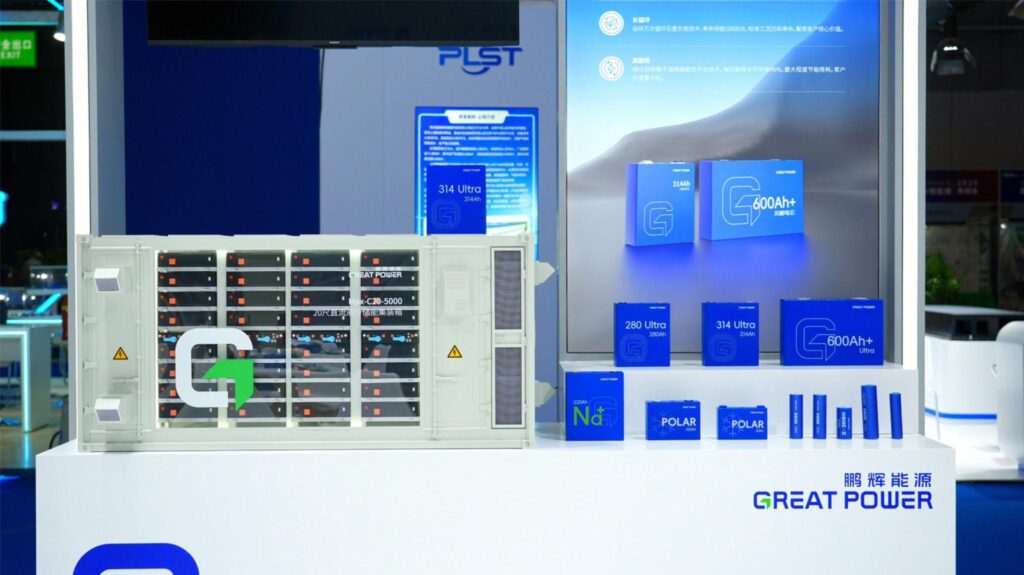
Great Power’s portfolio extends beyond consumer batteries into energy storage cells, battery packs, racks, cabinets, and complete systems. Its official product information also describes technologies including Li-ion Battery solutions and Sodium-ion Battery development. This broader technical base reflects an organization working across multiple battery markets rather than concentrating on a single device category.
For wearable manufacturers, this breadth can be useful when battery requirements become more sophisticated as products evolve toward greater connectivity, sensing, and computing capability.
OEM Support From Development to Production
Choosing a battery OEM is ultimately a development decision as much as a purchasing decision. Manufacturers need a supplier that can understand technical specifications, accommodate mechanical constraints, support customization, and maintain consistent quality after the product enters mass production.
Great Power’s consumer battery business specifically describes customized services for customer requirements and highlights applications ranging from smart wearables to medical devices and intelligent IoT. Its published information also emphasizes a broad range of models and molds for customized production.
This approach can help wearable brands manage the transition from early design requirements to a repeatable manufacturing solution. For products with frequent revisions, supplier engineering responsiveness can be particularly important because battery requirements may change as device functions, dimensions, or charging systems evolve.
Why OEMs Should Evaluate the Complete Battery Partnership
The best battery supplier is not necessarily the one offering the highest nominal capacity. Wearable OEMs should evaluate the complete combination of energy performance, dimensions, safety, charging characteristics, manufacturing consistency, customization capabilities, quality systems, and production scalability.
Great Power Battery Co., Ltd. is positioned within a broader battery manufacturing organization whose consumer portfolio explicitly serves smart wearables and other compact electronics. Its long-standing battery experience, automated manufacturing capabilities, extensive consumer battery portfolio, and customization focus provide a foundation for OEM cooperation.
For wearable manufacturers, partnering with an energy storage company that also understands compact consumer electronics can create additional development value. Great Power Battery Co., Ltd. combines consumer battery expertise with wider battery technology and manufacturing capabilities, giving OEM customers a potential partner for developing reliable power solutions as wearable products become smaller, smarter, and more demanding.