

When an industrial programmable logic controller or smart energy gateway outgrows its early prototyping phase, hardware architects inevitably face a familiar bottleneck: running out of pins, memory, and analog channels. Shrinking chassis dimensions leave no room for auxiliary expanders, while firmware teams demand extra flash memory for over-the-air updates and cryptographic security stacks.
Solving this hardware crunch without completely redesigning complex system schematics requires selecting a balanced computational backbone. Implementing an established STMicroelectronics 32-bit microcontroller (MCU) allows engineering groups to step up peripheral density while retaining code compatibility across legacy firmware repositories.
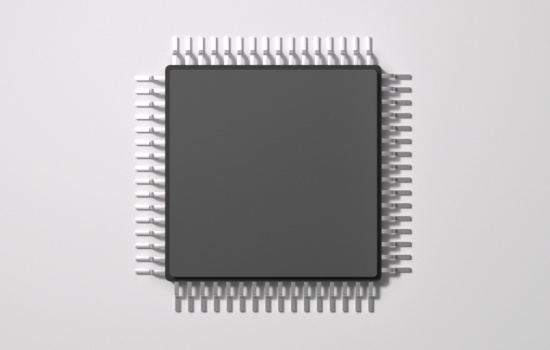
The STM32F103RCT6 directly answers this challenge, pairing 64 pins of high-density connectivity with generous memory reserves. Yet, specifying capable silicon on a schematic is only half the battle; maintaining steady production runs requires securing a dependable MCU supplier early in the prototyping lifecycle.
Beyond 48 Pins: Resolving Peripheral Starvation in Smart Machinery
Many initial embedded designs launch on 48-pin platforms like the STM32F103C8T6. However, as machinery evolves to support CAN communication, multiple serial sensors, and dedicated operator panels, board real estate becomes constrained by pin-multiplexing trade-offs and routing conflicts.
Stepping up to the 64-pin LQFP package of the STM32F103RCT6 unlocks up to 51 general-purpose input and output pins. This expanded footprint permits direct point-to-point connections with external relays, optocouplers, and human-machine interface drivers without requiring costly I2C expanders that slow bus throughput.
Crucially, the majority of these I/O lines tolerate 5-volt logic levels. This tolerance eliminates external level-shifting buffers when interfacing with legacy industrial sensors, shrinking bill-of-materials line items while saving precious board space across compact assemblies.
Architectural Depth: Evaluating the STMicroelectronics 32-Bit Microcontroller (MCU)
Operating on an ARM Cortex-M3 core clocked at 72 megahertz, this processing engine handles deterministic control loops with minimal latency. Its nested vectored interrupt controller supports prioritized and nested interrupt handling, helping firmware respond to time-critical events such as emergency stop signals and over-current alerts.
Memory capacity represents a substantial leap forward for expanding firmware projects. With 256 kilobytes of on-chip flash and 48 kilobytes of SRAM, the device comfortably accommodates real-time operating systems like FreeRTOS alongside networking communication stacks, bootloaders, and local event logs.
Mixed-signal integration is equally formidable. Three independent 12-bit analog-to-digital converters provide up to 16 external input channels, enabling simultaneous phase-current tracking and bus-voltage monitoring at sampling speeds down to one microsecond.
Complementing the conversion stage, two independent 12-bit digital-to-analog converter channels give engineers native analog synthesis capabilities. These outputs generate precise reference voltages or variable control signals for motor drives without demanding external PWM filtering stages or discrete converters.
Preserving Signal Integrity Across Dense 64-Pin Mixed-Signal Layouts
Routing high-density 64-pin microcontrollers demands strict separation between noisy digital switching signals and precision analog traces. Rapid clock transitions on 72-megahertz buses can easily inject ripple into sensitive analog-to-digital converter reference rails if routing discipline slips.
Designers should maintain a continuous ground reference and carefully manage analog and digital return paths to reduce noise coupling. Ground partitioning, if required, should follow the MCU manufacturer’s layout recommendations. Placing low-ESR 0.1-microfarad ceramic decoupling capacitors within millimeters of each VDD pin keeps supply impedance low during aggressive computational bursts.
Furthermore, crystal oscillator routing requires compact, isolated traces enclosed by ground guard rings. Isolating the external high-speed resonator from fast-switching PWM lines suppresses parasitic jitter and ensures compliant electromagnetic emission profiles during formal industrial EMC certification trials.
Mitigating Factory Allocation Risks: Partnering with a Qualified MCU Supplier
Silicon availability in the industrial sector frequently experiences sharp allocation swings and extended delivery schedules. Even minor component shortages can idle automated surface-mount assembly lines, turning projected quarterly profits into expensive backorders and factory delays.
Unibetter distributes a wide range of electronic components, empowering contract manufacturers and OEMs to maintain steady assembly schedules through unpredictable market shifts. Reliable inventory access allows purchasing teams to handle sudden order surges without sacrificing project milestones.
Counterfeit integrated circuits present a severe hazard to industrial deployments, often leading to intermittent field failures and safety hazards. To protect critical builds, Unibetter sources and procures electronic components from franchised sources to guarantee 100% authentic, quality-assured and brand-new electronic components.
Maintaining comprehensive lot traceability protects automated production against out-of-spec silicon and unverified factory rejects. Establishing authenticated sourcing channels guarantees that every component performs strictly to original datasheet specifications under demanding factory environmental conditions.
Bill-of-Materials Economics and Multi-Year Firmware Scaling
Managing product longevity requires continuous monitoring of component status, factory notices, and second-source availability. Unexpected product change notifications can force expensive circuit board respins if engineering and purchasing teams operate in isolation.
Consulting an experienced MCU supplier provides critical early warnings regarding factory lead-time extensions, allowing buyers to lock in required volumes before allocation freezes take hold. This transparency bridges the gap between hardware engineering milestones and commercial manufacturing demands.
Deploying the STMicroelectronics 32-bit microcontroller (MCU) across unified hardware families creates procurement leverage. Standardizing firmware drivers and PCB footprints across product tiers reduces component qualification overhead while stabilizing component procurement agreements over multi-year production schedules.
Closing the Loop: Translating Silicon Precision into Production Stability
Balancing high peripheral density with long-term commercial viability requires an integrated development methodology. Modern connected equipment relies on responsive processing engines capable of managing dense I/O configurations while surviving electrically harsh shop floors and extreme factory temperatures.
The STM32F103RCT6 delivers this operational balance, pairing expansive 256-kilobyte flash memory with advanced analog converters and versatile communication buses. Its proven architecture simplifies firmware evolution, allowing development teams to deploy new feature updates without outgrowing internal memory limits.
Keeping Embedded Designs Production-Ready
However, long-term engineering success extends beyond circuit boards and firmware routines to encompass disciplined supply chain execution. When engineering departments combine noise-immune board layouts with verified franchised distribution, they protect their products against electrical interference and market shortages alike.
Securing genuine silicon through dependable procurement channels establishes a solid foundation for industrial innovation. This dual focus on technical precision and supply chain resilience ensures that advanced embedded devices remain competitive, profitable, and durable across their entire operational lifecycle.
